5. Functions of orthopedic plates
Orthopedic plates are not all used the same way.
Depending on the type of fracture, bone stability, and the surgical objective, they can play three main roles: compression, neutralization, or bridging.
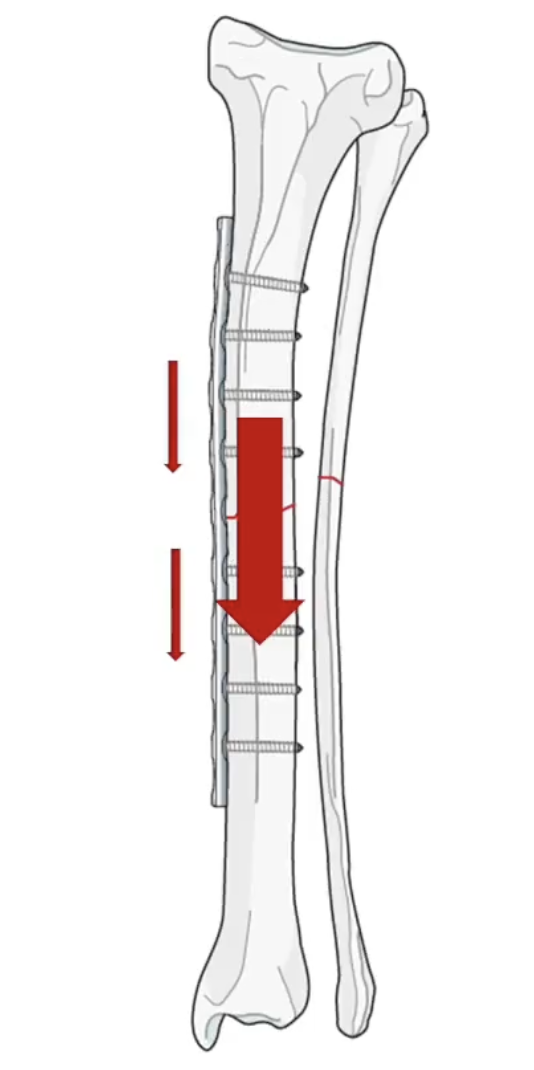
🔹 1. Compression function
Principle:
- The plate directly brings the bone fragments together, creating a compressive force at the fracture.
- Compression promotes primary healing by bone‑to‑bone contact.
Indications:
- Simple, transverse fractures.
- Situations where direct contact between fragments is possible.
Load sharing:
- The plate transfers little load; the bone bears most of the forces, the animal’s weight.
- Requires a sufficiently strong bone and a stable fracture to bear the load and allow healing.
Illustration :
🔹 2. Neutralization function
Principle:
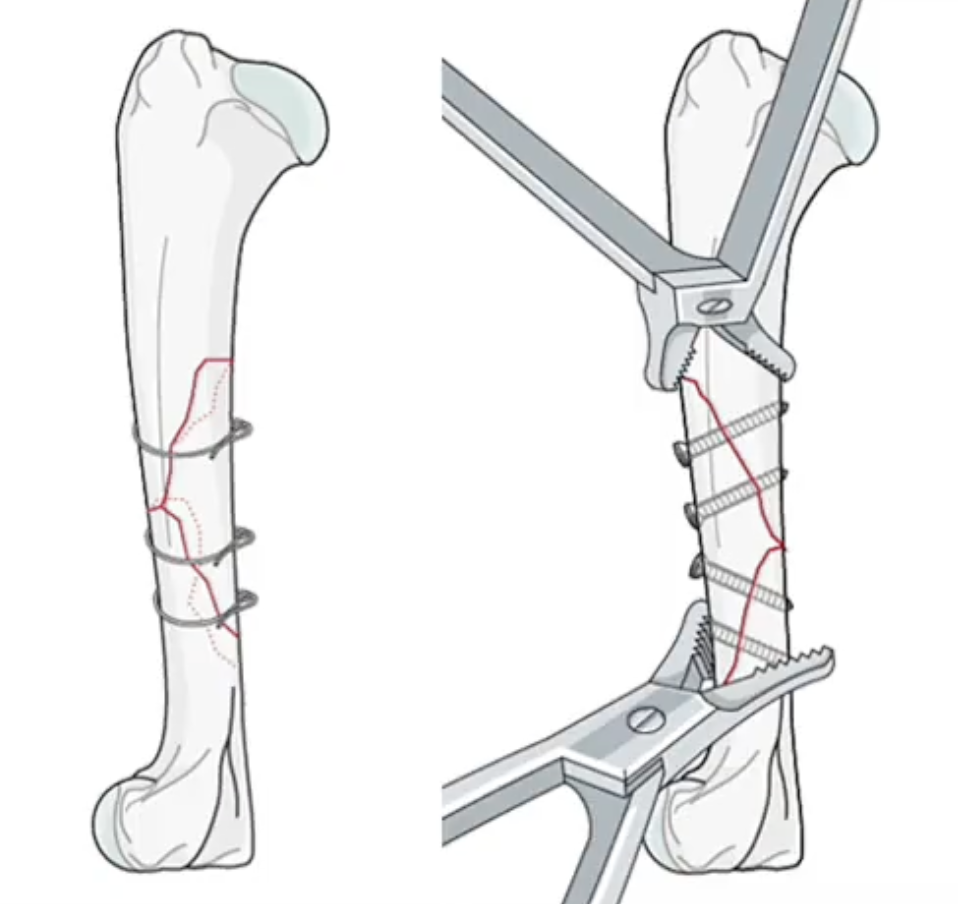
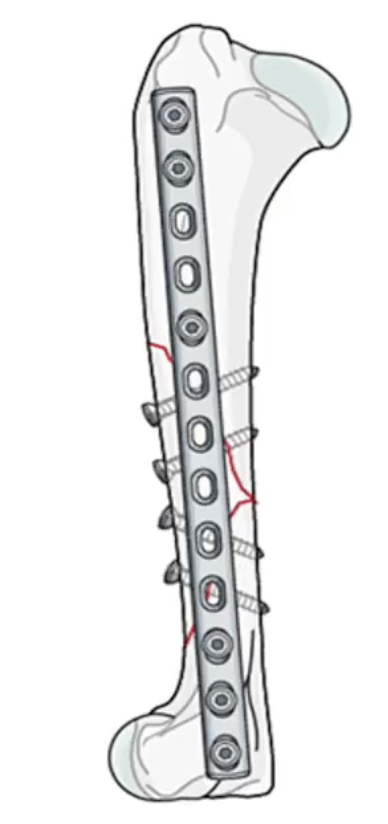
- The plate does not bring fragments together with a compressive effect.
- It protects the screws and the fracture site from mechanical forces (bending, torsion, traction).
- It neutralizes constraints generated by movements or muscles.
Indications:
- Long oblique fractures where compression by the screw alone is not enough.
- When the veterinarian wants to protect the reduction already obtained.
Load sharing:
- The load is shared between the bone and the plate.
- The bone bears part of the forces, but the plate takes over in case of significant stresses.
Illustration :
🔹 3. Bridging function
Principle:
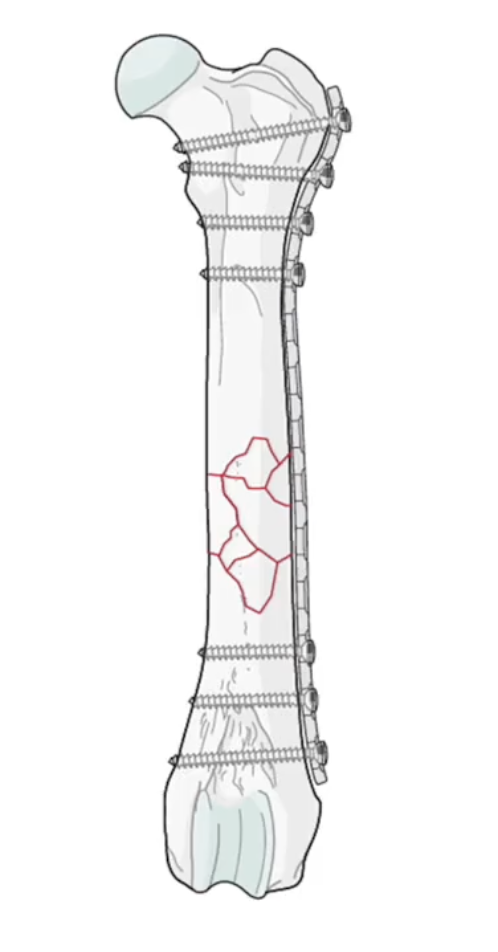
- The plate serves as a bridge between multiple or comminuted fragments.
- The fracture is not manipulated, which preserves vascularization and fragile bone fragments.
Indications:
- Comminuted or multiple fractures
- Fragile bones.
- Anatomical realignment required without compression
Load sharing:
- The plate bears most of the load, as the fragile or fragmented bone cannot bear the forces.
- Additional implants may be necessary to distribute the load (second plate or pin)
Illustration :
🔹 4. Comparative summary of functions
Function | Principle | Load sharing | Plate thickness | Indications |
Compression | Brings fragments together | Bone bears the majority | Standard | Simple transverse fractures |
Neutralization | Protects the fracture | Load shared bone/plate | Medium | Long oblique fractures |
Bridging | Bridges multiple fragments | Plate bears the majority | Thick/reinforced | Comminuted fractures |
Commenting is not enabled on this course.