3. Orthopedic procedures without fracture
🦿 Not all orthopedic surgeries involve a fracture
Some procedures use orthopedic equipment to correct a deformity or stabilize a joint, even without a broken bone.
This is an important part of surgical interventions, especially in medium and large dogs.
📋 Typical examples
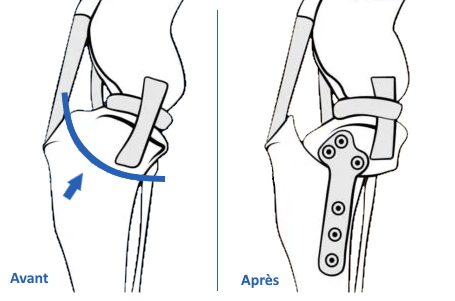
TPLO (Tibial Plateau Leveling Osteotomy)
TPLO is now considered the modern method for treating cruciate ligament ruptures in medium and large dogs.
Instead of replacing the ligament or placing external implants, the surgeon changes the angle of the tibial plateau by making a small cut in the tibia, then repositions the bone to naturally stabilize the knee.
This technique allows the dog to more quickly regain normal function of the limb and reduces long-term joint wear.
The repositioned tibia is held by a plate and screws.
Compared to older methods, TPLO often offers faster recovery and better control of knee stability.
Illustration:
DPO / TPO (Double or Triple Pelvic Osteotomies)
Certain bony abnormalities, such as hip dysplasia, can cause pain and poor growth in young dogs.
Hip dysplasia is a malformation of the coxofemoral joint: the femoral head does not fit properly into the pelvis, creating instability, pain, and, in the long term, osteoarthritis.
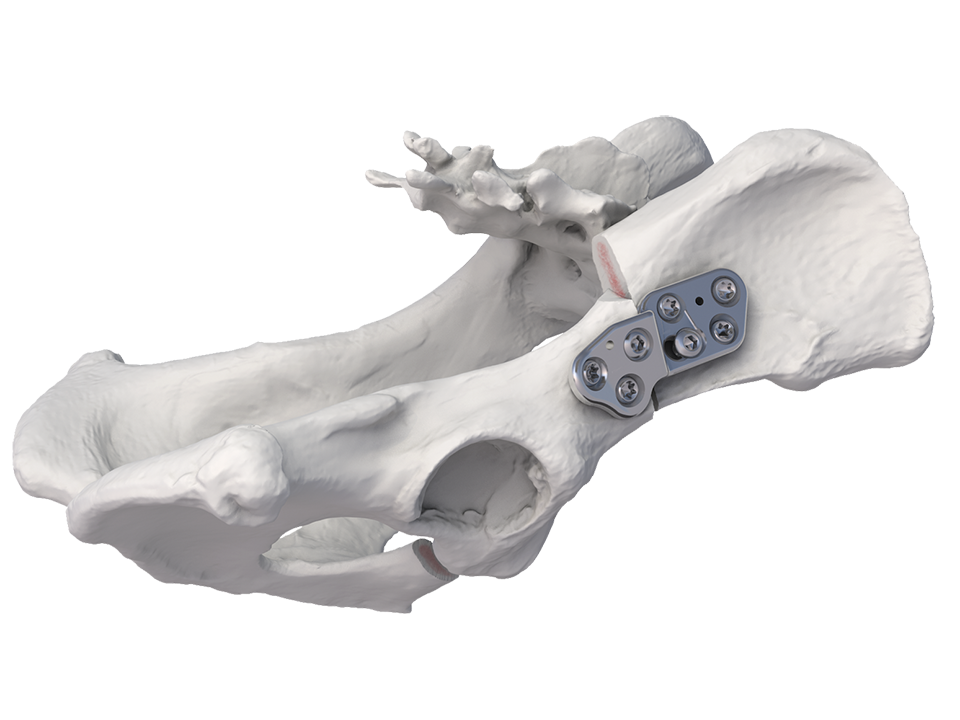
To correct this problem, surgeons can perform double (DPO) or triple (TPO) pelvic osteotomies. This consists of cutting and repositioning parts of the pelvis to realign the hip joint and improve its function.
Once the bones are repositioned, plates and locking screws ensure stability during healing.
Illustration:
Arthrodesis
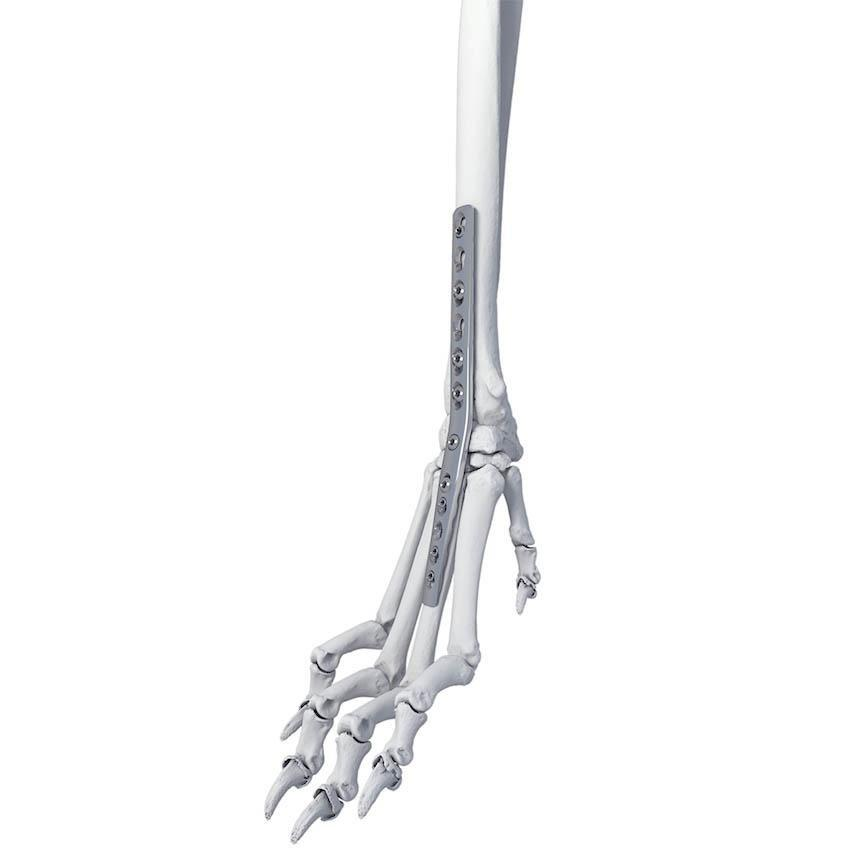
When certain joints are too painful or unstable (for example the carpus or tarsus), arthrodesis consists of fusing them.
The surgeon locks the joint in a fixed position using plates and screws so that the bones consolidate together.
Even though joint mobility is lost, the dog or cat regains a stable, pain-free function, which significantly improves quality of life.
This surgery is often performed in large dogs or cats with severe or chronic injuries or severe osteoarthritis of the wrist or ankle.
Illustration:
💡 Practical points
Orthopedic equipment is not only used to repair a fracture, but also to correct, stabilize or improve the function of the locomotor system.
Unlike fractures, these surgeries are planned in advance, allowing better preparation of the necessary materials and instruments. They often require specific and technical devices, which demands good organization and anticipation by specialized clinics.
Commenting is not enabled on this course.