7. Shapes of orthopedic plates
🧩 Shapes of orthopedic plates
In addition to their mechanical system (compression, locking, or mixed), orthopedic plates also differ in shape, which depends on:
- the anatomical area where they are placed,
- the type of fracture or surgery,
- the geometry of the bone (straight, curved, articular).
Some plates use a single system (e.g., DCP), others are mixed, with holes allowing cortical screws or locking screws.
🔹 1. Straight plates
Straight plates are the most used for diaphyseal fractures (central part of long bones: femur, tibia, humerus, radius).
They form the basis of internal fixation in veterinary orthopedics.
They can be modeled manually using contouring tools to fit the curvature of the bone.
Some straight plates are breakable: they can be cut to shorten the plate by removing one or more holes.
They exist in “simple,” DCP, locked, or combi versions.
Illustration :
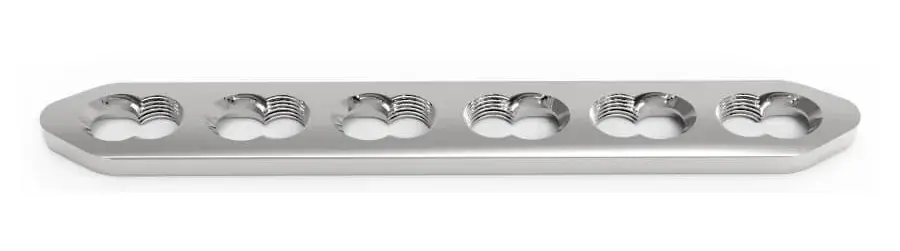

Our straight plates:
Our range mainly consists of straight plates:
Available variants:
- Screw diameters: 2.0 mm, 2.4 mm, 2.7 mm, 3.5 mm, and 3.5 mm Large
- Lengths: from 4 holes up to 20 holes
Our range also includes breakable simple plates (i.e., to be cut):
These plates include 50 holes compatible with screws of 2.0, 2.4, and 2.7 mm.
Our screws (see chapter 6):
Finally, our range of screws includes:
Available variants:
- Screw diameters: 2.0 mm, 2.4 mm, 2.7 mm, and 3.5 mm
- Lengths: from 6 mm to 50 mm
🔹 2. Shaped or anatomical plates
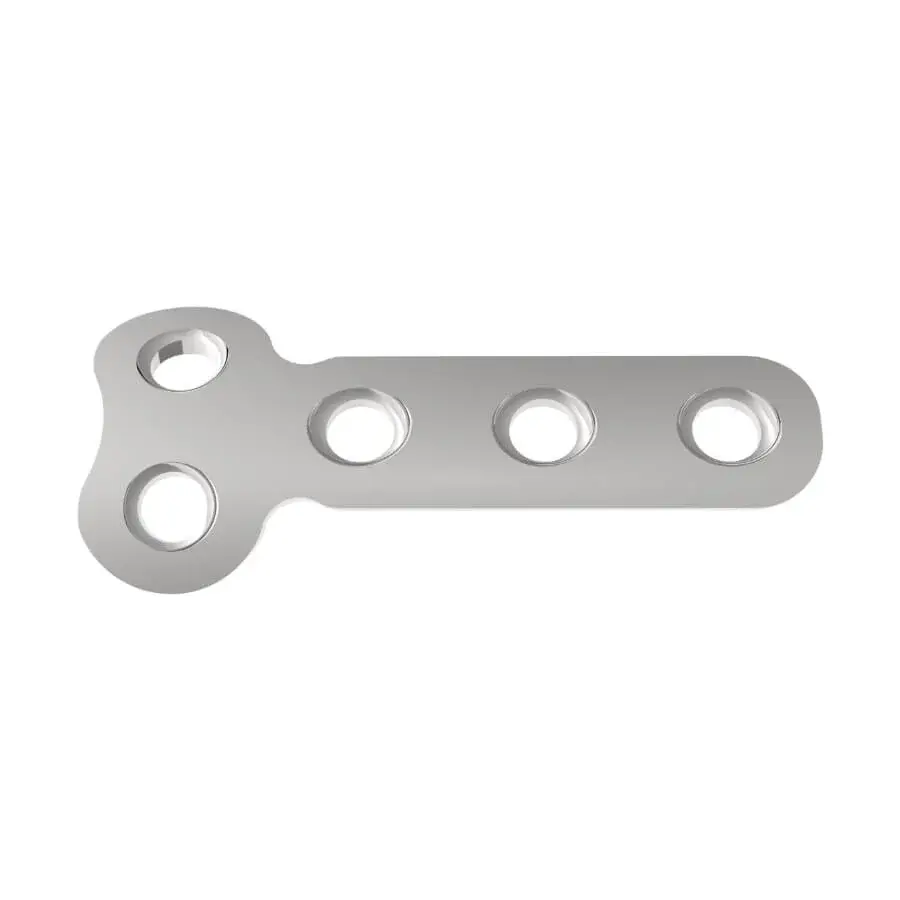
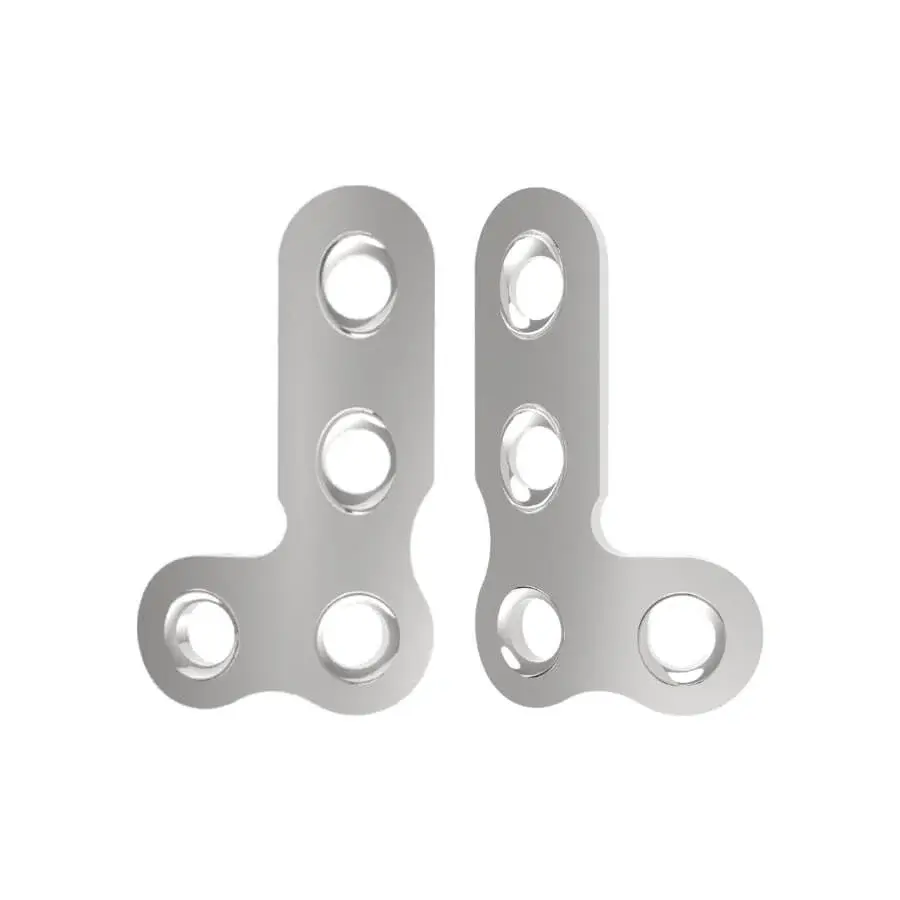
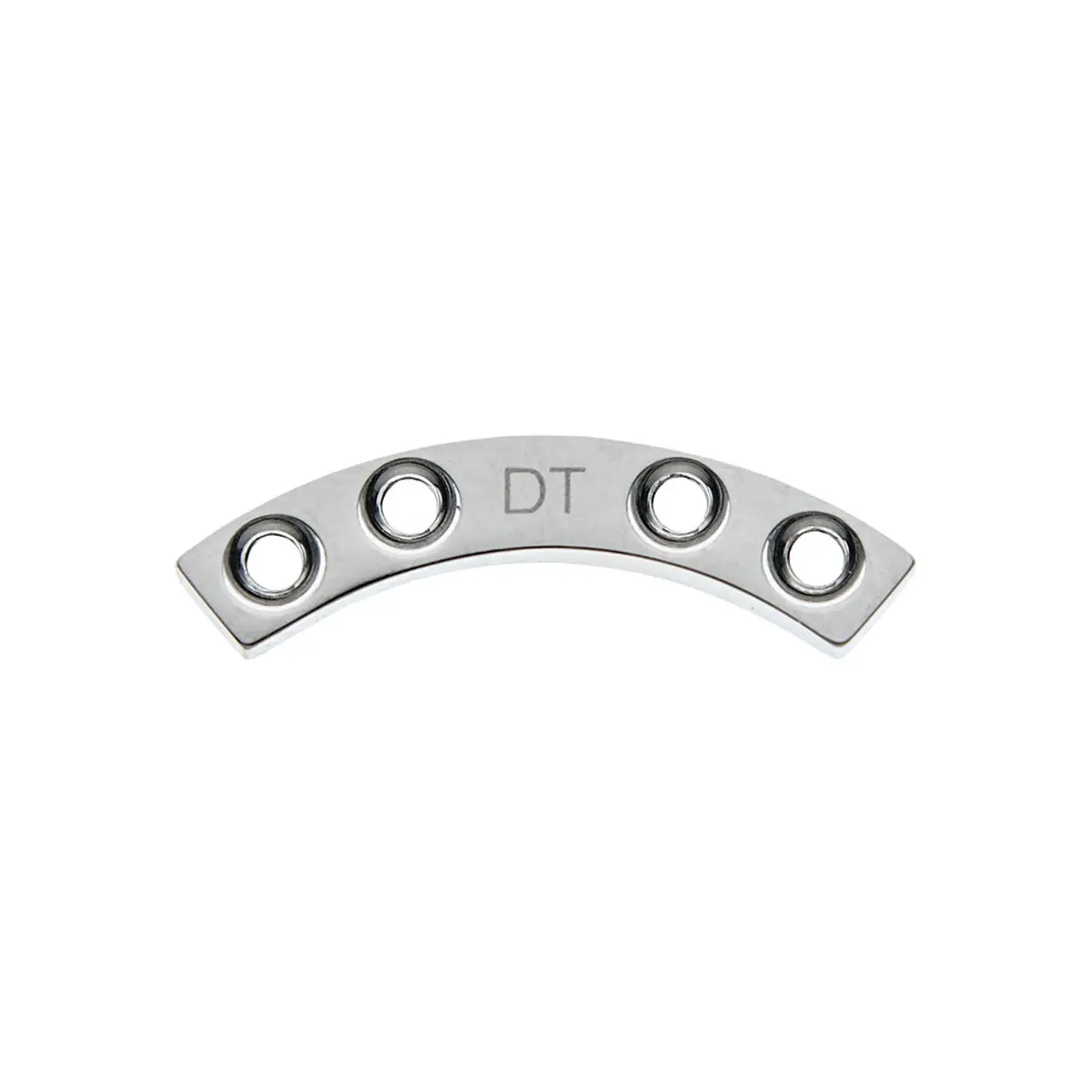
These plates are designed to fit bone morphology, particularly near joints or bone ends. They are often pre‑bent and asymmetrical.
Common examples:
- T‑plates: used on distal metaphyses (distal radius, distal tibia).
- L‑plates : suited to the distal femur or proximal humerus.
- Condyle plates: match the shape of the distal condyle of the radius or the elbow.
- Distal femur plates: feature a widening to stabilize distal articular fragments.
- Acetabular plates: adapted to the hip socket, often highly curved.
Advantages:
- Reduced contouring time.
- Better anatomical fit.
- More reproducible positioning.
Illustrations :
🚧 COMING SOON – Evolution of the Fixus® range
Our Fixus range is soon evolving to include preformed anatomical plates.
🔹 Specific surgery plates
Some plates are designed for a specific surgical technique, not just a fracture.
They meet a particular functional need (angular correction, osteotomy, joint stabilization…).
Examples:
- TPLO plate: used for rotation of the tibial plateau (cruciate ligament rupture).
- TTA plate: associated with a cage, allows advancement of the tibial tuberosity.
- DPO/TPO plate: intended for correction of hip dysplasia.
- Arthrodesis plates: used to permanently fuse a joint (carpus, tarsus).
Characteristics:
- Very specific and optimized shape.
- Often preformed or pre‑angled.
- Mostly designed for a locked or mixed system, allowing immediate stability.
Important point:
- These surgeries are scheduled and not urgent, which allows the practitioner to anticipate equipment. The sales representative can therefore propose the solution upstream and support planning.
Illustrations :
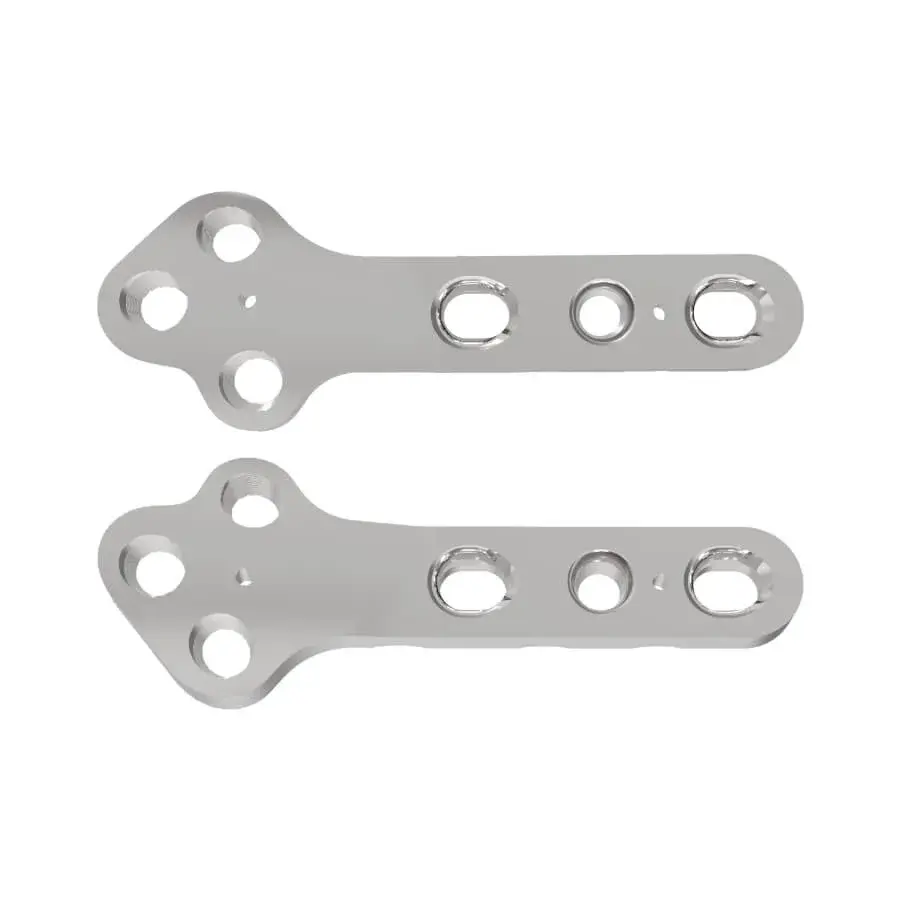
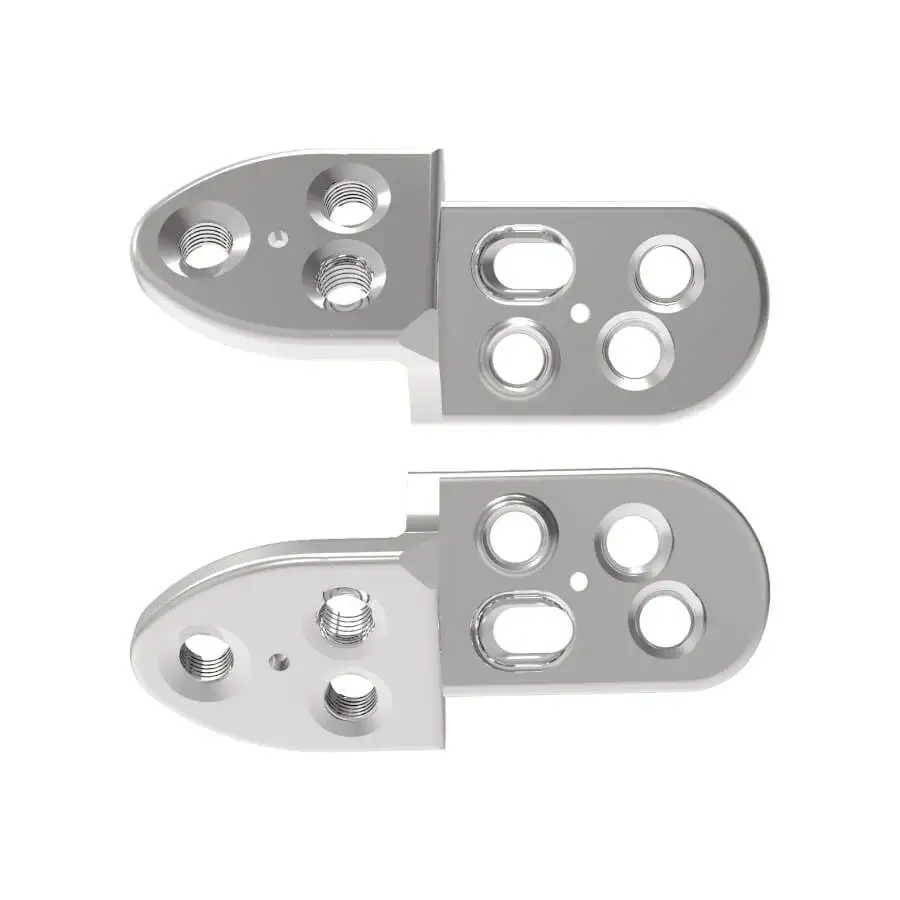
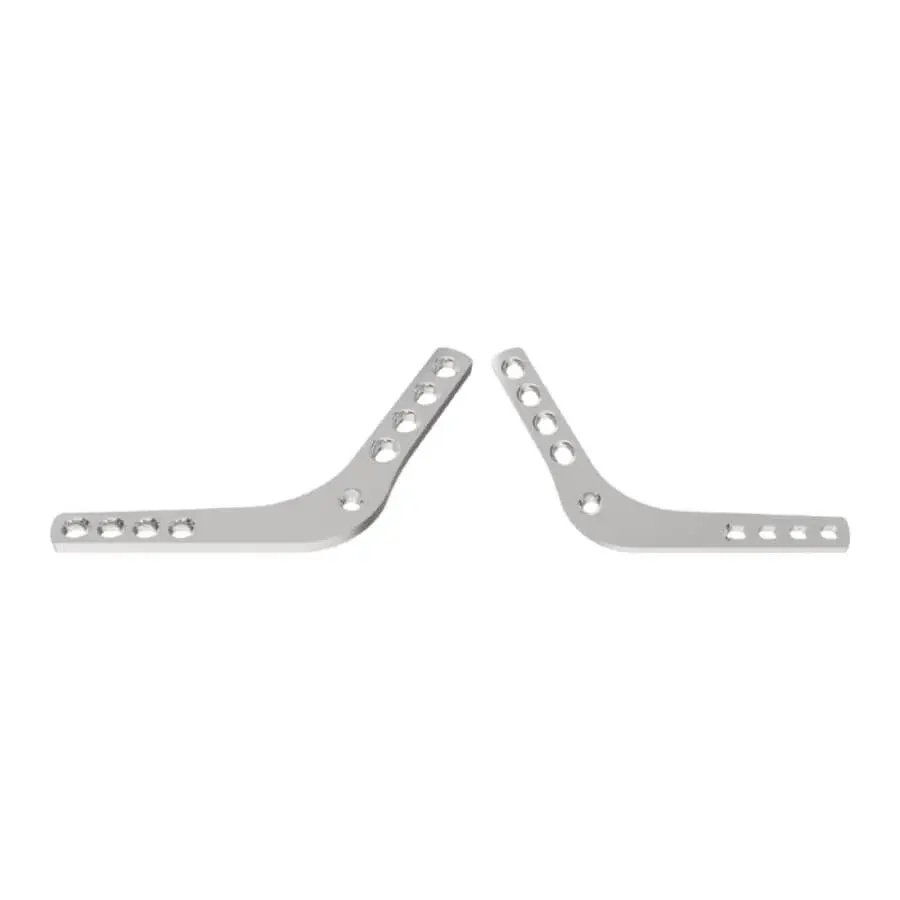
- Screw diameters available: 2.0 mm, 2.4 mm, 2.7 mm, and 3.5 mm
- Sizes (for 3.5 mm plates): Mini, Standard, Large, and Jumbo
- Sides available: Left and Right
- Screw diameter: 3.5 mm
- Angles available: 20°, 25°, and 30°
Fixus® Pancarpal Oval Arthrodesis Plate :
- Compatible screw diameters: from 1.5 mm to 3.5 mm
- Number of holes: from 9 to 11 holes
Pantarsal arthrodesis plates:
- Compatible screw diameters: from 2.0 mm to 3.5 mm
- Sides available: Left and Right
- Number of holes: 9 holes
Commenting is not enabled on this course.